
Beatrix Potter: a life spent looking
Beatrix Potter, 1866 to 1943
On Beatrix Potter’s studies of nature, the books that gave her independence, and her later life farming in the Lake District.
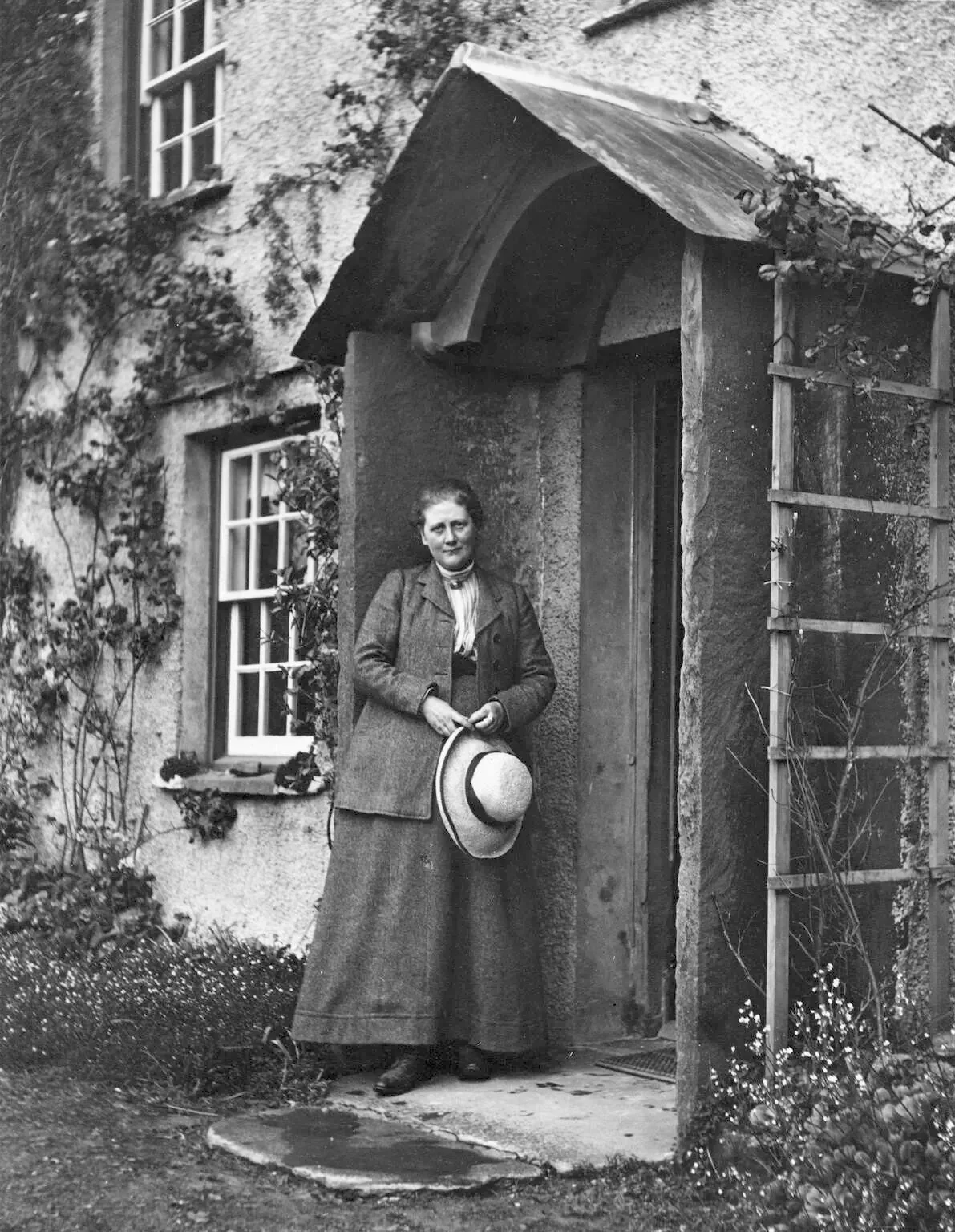

In 1893, Beatrix Potter wrote to five-year-old Noel Moore, who was ill in bed. Unable to think of anything to tell him, she drew four rabbits. One of them was Peter. The letter would eventually become the beginning of her first book.
She had already spent years watching animals, plants and fungi. Long after the books made her famous, she would turn to sheep, farms and the land of the Lake District. To get to know Potter is to follow that attention through her whole life.
She had spent ten years learning to look
The rabbits in that letter are drawn by someone who has watched rabbits for a long time. That is not a compliment to her talent. It is a description of how she had been spending her twenties.
Potter grew up in a London house with a schoolroom at the top of it, educated at home by governesses. That schoolroom filled with animals, a brother who collected them with her, and long Scottish and Lakeland summers. What came of it was not a hobby. Through the 1890s she worked on fungi: collecting, sectioning, drawing under a microscope, corresponding with Charles McIntosh, a postman and self-taught naturalist she had met at Dunkeld in 1892. By 1895 she had a theory about how spores germinate.
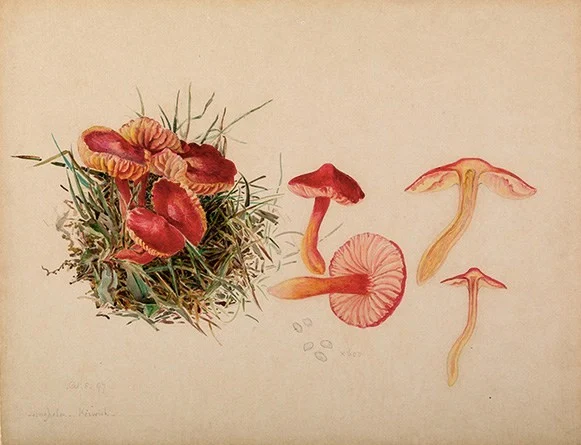

On 1 April 1897 a paper of hers, On the germination of the spores of Agaricineae, was read to the Linnean Society of London. She did not read it herself. George Massee of Kew read it for her, which was ordinary Victorian practice, and she could not have been a member in any case, because the Society did not admit women until 1904. A week later she withdrew the paper. Her own account of why is flat and practical: they say it requires more work in it before it is printed. She never sent it back. The manuscript is lost.
The story is usually told as a door slammed in a woman’s face; the Society’s own history is more careful, and the care is warranted. What is true without embellishment is that she was working at the edge of a field, alone, without a laboratory or a degree or anyone whose job it was to encourage her, and that at thirty she stopped.
That decade never left the drawings. It is why Peter is a rabbit before he is a boy. He goes on all fours when he is frightened and on two legs when he is being naughty, his ears do what an actual rabbit’s ears do, and the cabbages in Mr. McGregor’s garden are a particular kind of cabbage in particular soil. The clothes are a fiction laid over an animal that was drawn straight.
The books gave her a life of her own
When six publishers declined Peter Rabbit, Potter had it printed herself in 1901. The following year, Frederick Warne published it in colour. She had found both readers and an income of her own.
How that small book works, in words and pictures, is a story in itself. We follow it in our article about Peter Rabbit.
The second half of the life
Norman Warne, the youngest of the publishing brothers, was the one who worked on the books with her. They became engaged in 1905, against her parents, who thought a man in trade beneath them. He died the same year, of pernicious anaemia, at thirty-seven. She was thirty-nine.
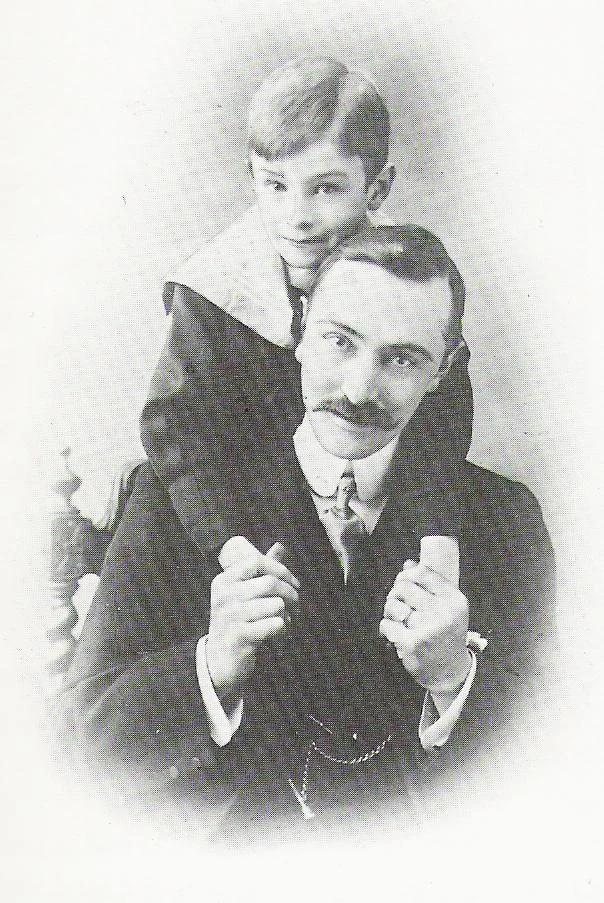

That autumn she bought a farm. The books had made her money that was her own, and she spent it on land: Hill Top, at Near Sawrey, and then Castle Farm in 1909. In 1913 she married William Heelis, the local solicitor who had handled the purchases, and became Mrs. Heelis, which is what she preferred to be called for the next thirty years.
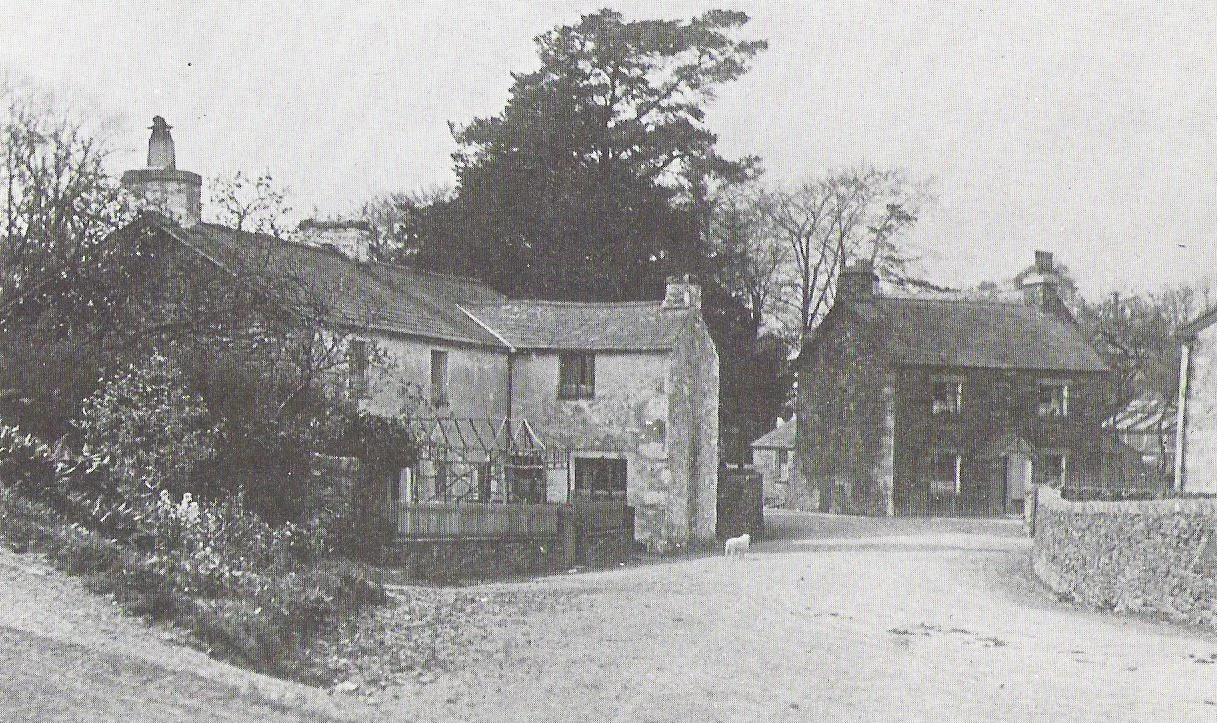

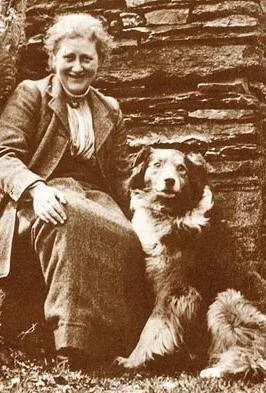

What she did then is less famous than the rabbits and matters at least as much. She took up Herdwick sheep, the hardy grey breed of the high Lakeland fells, at a point when the breed and the hill farms that carried it were both going under. She bought Troutbeck Park in 1923 to save its flock. She showed her sheep, judged at the local shows, won prizes across thirty years, and in March 1943 was elected president of the Herdwick Sheepbreeders’ Association, the first woman to hold it, with the term to begin the following March. She died on 22 December that year.
She left the National Trust fifteen farms and more than four thousand acres, on the condition that the fell flocks stay pure Herdwick and the farms stay farmed. They are, and they are. The Lake District that people photograph is in part a decision she made and paid for.
Meet her stories
The Tale of Peter Rabbit, The Tale of Squirrel Nutkin and The Tale of Johnny Town-Mouse are in our catalogue in English and Swedish. They carry the attention she practised long before her first book. The animals have clothes and troubles, but they remain animals.
Read on about Peter Rabbit, the small book and our wider pictures.
Sources
- The Beatrix Potter Society, The Farmer: beatrixpottersociety.org.uk: Hill Top 1905, Troutbeck Park 1923, prizes at local shows, elected President March 1943 for a term from March 1944, fifteen farms and over 4,000 acres to the National Trust.
- Victoria and Albert Museum, Peter Rabbit: the tale of the Tale. The letter to Noel Moore in 1893, the private edition in 1901 and Frederick Warne’s edition in 1902.
- The Linnean Society, Beatrix Potter: the tale of the Linnean Society: linnean.org: paper no. 2978 read by George Massee on 1 April 1897, withdrawn 8 April, Potter’s own “requires more work in it” letter, the 1997 “treated scurvily” remark and the Society’s qualification of the popular version.
- Wikipedia, Beatrix Potter and The Tale of Peter Rabbit: birth and death dates, Charles McIntosh 1892, spore-germination theory 1895, Norman Warne, marriage to William Heelis 15 October 1913, six publishers declining.
Image credits
Each caption links to its image source. The photographs and the fungus study are historical images.